Black metal fencing looks at home on almost any property, from a downtown Rome bungalow to a farm outside Cave Spring. But “metal fence” covers three very different materials: wrought iron, aluminum and steel. Each one handles strength, rust, upkeep and cost differently, and humid summers make some of those differences matter more.
Here’s how they compare, from a shop that builds fences and gates in Cave Spring, just southwest of Rome.
The quick answer
Aluminum is the low-maintenance choice. It won’t rust and works well for pool areas, yards and decorative borders.
Steel (what most people mean by “wrought iron” today) is the strong choice for security, wide gates and fully custom designs, as long as it gets a good protective finish.
True wrought iron and cast iron are mostly found on older homes and historic properties. With these, the question is usually repair or restoration, not new fence.
What “wrought iron” means today
True wrought iron is a low-carbon iron that blacksmiths heated and hammered into shape. It’s no longer produced at commercial scale. When you see a “wrought iron fence” for sale today, it’s almost always made of steel, either solid bar or tubing, built in a traditional ornamental style. Cast iron, which is poured into molds, shows up on many antique fences and finials. It’s beautiful but brittle, so it can crack if it’s struck.
That matters when you compare quotes. You’re usually choosing between steel and aluminum, with “wrought iron” describing the look.
Side-by-side comparison
Feature
Aluminum
Steel (“ornamental iron”)
True wrought or cast iron
Strength
Good; can bend if hit hard
Highest; rigid on long spans
Strong (cast iron is brittle)
Rust
Doesn’t rust
Rusts wherever the finish is broken
Rusts; needs regular care
Weight
Light
Heavy
Heavy
Upkeep
Low: wash, check fasteners
Moderate: touch up chips quickly
Highest
Design freedom
Good
Excellent; almost anything can be fabricated
Matching existing work
Relative cost
Often lower for standard styles
Often higher, especially for custom designs
Repairs quoted per project
Best for
Pools, yards, low upkeep
Security, estate looks, gates
Historic homes
Aluminum: low maintenance, lighter duty
Aluminum’s biggest advantage is that it doesn’t rust, which is a real plus in a humid climate. It’s light, so it’s easier on posts and gate hardware, and a factory or powder-coated finish keeps it looking good with little more than an occasional rinse. The trade-off is strength. Aluminum pickets and rails are less rigid than steel, so they can bend if a vehicle, a fallen limb or a determined animal hits them. For very wide driveway gates, aluminum may need extra bracing.
Pool areas are a natural fit for metal fencing. Whatever the material, a pool fence also has to meet barrier rules.
Steel: the strongest and most customizable
Steel is what most people picture when they say “wrought iron fence.” It’s the strongest option, it holds its shape over long runs and wide gates, and it can be cut, bent and welded into nearly any pattern, from simple pickets to scrollwork, monograms or a design matched to your home’s architecture.
With steel, the finish matters most
Steel’s weakness is rust. A steel fence lasts about as long as its coating does. Hot-dip galvanizing, powder coating, a quality primer-and-paint system, or a combination of these all protect it, and they differ in price and durability. Ask us about finish options for your fence. When you compare quotes, ask exactly how the metal is cleaned and finished, not just what color it will be.
A long run of black ornamental picket fence along a pasture edge.
True wrought and cast iron: repair what you have
If your home already has an antique iron fence, replacing it isn’t always the best move. Original ironwork can often be repaired: broken pickets get replaced, loose joints get re-welded, rust is removed and the metal is refinished. Replacement pickets, scrolls and other parts can be fabricated to match the existing pattern. Our iron fence repair and restoration page explains how a repair job works. In a historic district, restoring the original fence may also make approval simpler than putting in a new one.
An iron fence around a historic family cemetery plot. Older ironwork in settings like this is often worth repairing.
What humidity means for your fence
Humidity doesn’t ruin a metal fence. Broken coatings do. Moisture gets in wherever paint is chipped, scratched by a mower or trimmer, or cracked at a weld, and that’s where rust starts on steel. Post bases deserve extra attention, because water and wet soil sit against them. A few habits help any metal fence last:
Walk the fence line in spring and fall and touch up chips right away.
Keep mulch, soil and sprinkler spray off the bottom rail and post bases.
Rinse off pollen and dirt that hold moisture.
Choose aluminum, or galvanized and coated steel, in areas that stay wet.
According to the City of Rome’s planning FAQ on the Unified Land Development Code, in single-family residential zoning a fence in a yard next to a street can be no more than 4 feet tall, and side and rear yards are limited to 6 feet. Fences 7 feet or taller need a building permit, and 8 feet or taller need engineered footings. Fences in a historic district must first be approved by the Historic Preservation Commission. Pool fences have their own barrier requirements, and Rome-Floyd Building Inspection has a separate pool and pool fence permit application. Cave Spring and the other towns we serve set their own rules, so check locally, and call 811 before digging.
Which one should you choose?
Around a pool or for a low-maintenance yard: aluminum is usually the easy pick, built to pool-barrier rules where they apply.
Security, livestock pressure or wide gates: steel.
A custom look matched to your house: steel gives the most design freedom.
An older home with original ironwork: look at restoration first.
For standard designs, aluminum usually costs less than custom steel “wrought iron” fencing. Highly custom work in either material is priced per project, so the honest answer for your property comes from a quote.
Does wrought iron rust outside?
Yes. Iron and steel rust wherever the protective finish is broken, so good preparation, a durable finish and quick touch-ups make the difference. Aluminum doesn’t rust.
How long does a metal fence last?
A well-built metal fence with a good finish and basic upkeep can last for decades. How long depends mostly on the finish, drainage at the posts and how quickly damage gets repaired.
Do I need a permit for a fence in Rome?
Under the city’s planning FAQ, fences 7 feet or taller need a building permit, and fences in historic districts need Historic Preservation Commission approval. Call Rome-Floyd Planning at 706-236-5025 to confirm for your property.

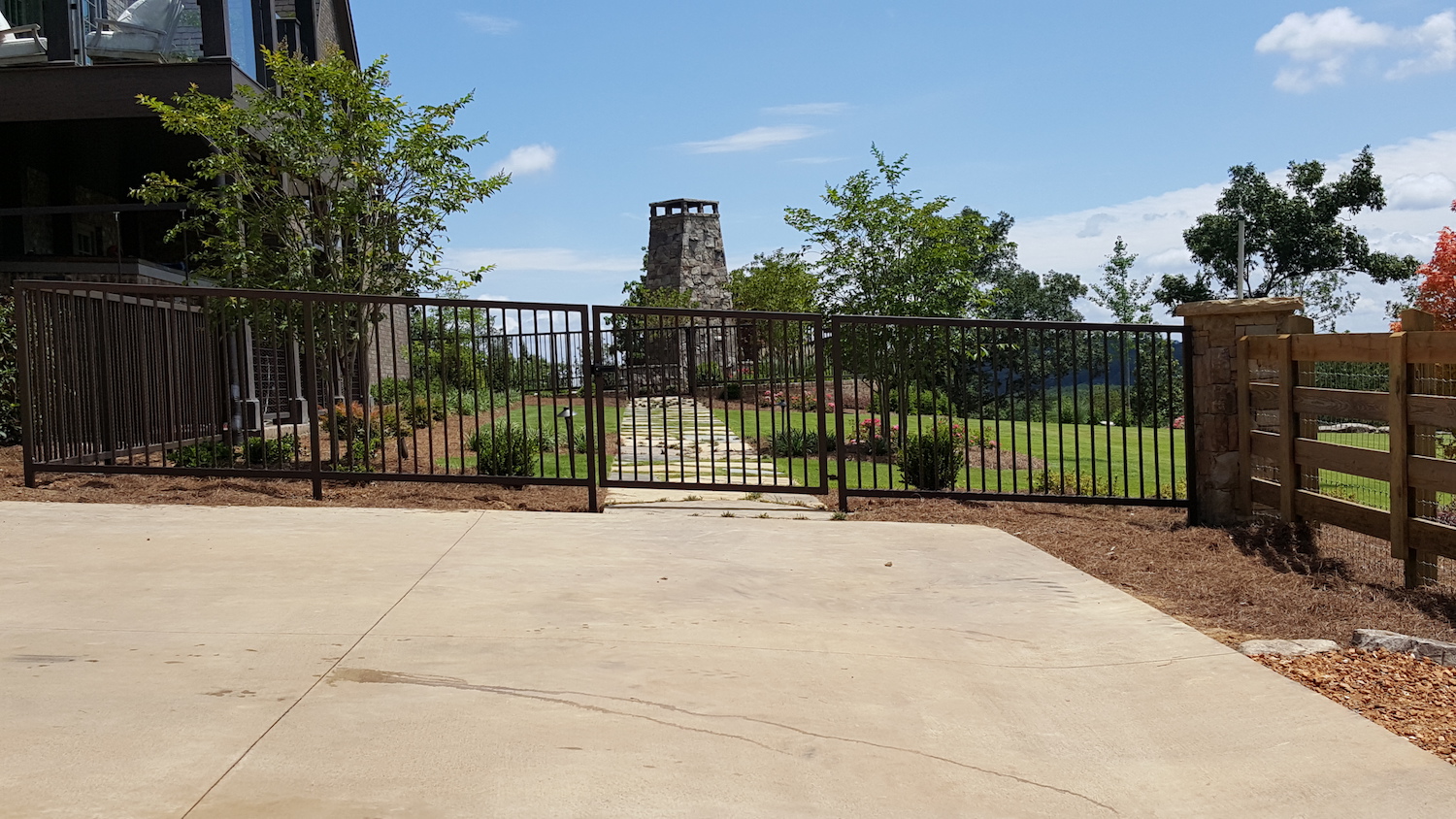

Black metal fencing looks at home on almost any property, from a downtown Rome bungalow to a farm outside Cave Spring. But “metal fence” covers three very different materials: wrought iron, aluminum and steel. Each one handles strength, rust, upkeep and cost differently, and humid summers make some of those differences matter more.
Here’s how they compare, from a shop that builds fences and gates in Cave Spring, just southwest of Rome.
The quick answer
What “wrought iron” means today
True wrought iron is a low-carbon iron that blacksmiths heated and hammered into shape. It’s no longer produced at commercial scale. When you see a “wrought iron fence” for sale today, it’s almost always made of steel, either solid bar or tubing, built in a traditional ornamental style. Cast iron, which is poured into molds, shows up on many antique fences and finials. It’s beautiful but brittle, so it can crack if it’s struck.
That matters when you compare quotes. You’re usually choosing between steel and aluminum, with “wrought iron” describing the look.
Side-by-side comparison
Aluminum: low maintenance, lighter duty
Aluminum’s biggest advantage is that it doesn’t rust, which is a real plus in a humid climate. It’s light, so it’s easier on posts and gate hardware, and a factory or powder-coated finish keeps it looking good with little more than an occasional rinse. The trade-off is strength. Aluminum pickets and rails are less rigid than steel, so they can bend if a vehicle, a fallen limb or a determined animal hits them. For very wide driveway gates, aluminum may need extra bracing.
Steel: the strongest and most customizable
Steel is what most people picture when they say “wrought iron fence.” It’s the strongest option, it holds its shape over long runs and wide gates, and it can be cut, bent and welded into nearly any pattern, from simple pickets to scrollwork, monograms or a design matched to your home’s architecture.
With steel, the finish matters most
Steel’s weakness is rust. A steel fence lasts about as long as its coating does. Hot-dip galvanizing, powder coating, a quality primer-and-paint system, or a combination of these all protect it, and they differ in price and durability. Ask us about finish options for your fence. When you compare quotes, ask exactly how the metal is cleaned and finished, not just what color it will be.
True wrought and cast iron: repair what you have
If your home already has an antique iron fence, replacing it isn’t always the best move. Original ironwork can often be repaired: broken pickets get replaced, loose joints get re-welded, rust is removed and the metal is refinished. Replacement pickets, scrolls and other parts can be fabricated to match the existing pattern. Our iron fence repair and restoration page explains how a repair job works. In a historic district, restoring the original fence may also make approval simpler than putting in a new one.
What humidity means for your fence
Humidity doesn’t ruin a metal fence. Broken coatings do. Moisture gets in wherever paint is chipped, scratched by a mower or trimmer, or cracked at a weld, and that’s where rust starts on steel. Post bases deserve extra attention, because water and wet soil sit against them. A few habits help any metal fence last:
For a full walkthrough of rust removal, primer and paint, see our guide to maintaining and painting iron in a humid climate.
Rules to check in Rome before you build
According to the City of Rome’s planning FAQ on the Unified Land Development Code, in single-family residential zoning a fence in a yard next to a street can be no more than 4 feet tall, and side and rear yards are limited to 6 feet. Fences 7 feet or taller need a building permit, and 8 feet or taller need engineered footings. Fences in a historic district must first be approved by the Historic Preservation Commission. Pool fences have their own barrier requirements, and Rome-Floyd Building Inspection has a separate pool and pool fence permit application. Cave Spring and the other towns we serve set their own rules, so check locally, and call 811 before digging.
Which one should you choose?
Many properties mix materials, with an aluminum fence line and a steel driveway gate finished to match. If a gate is part of your plan, read how to choose a driveway gate and what drives the cost of a custom driveway gate.
Frequently asked questions
Is aluminum fence cheaper than wrought iron?
For standard designs, aluminum usually costs less than custom steel “wrought iron” fencing. Highly custom work in either material is priced per project, so the honest answer for your property comes from a quote.
Does wrought iron rust outside?
Yes. Iron and steel rust wherever the protective finish is broken, so good preparation, a durable finish and quick touch-ups make the difference. Aluminum doesn’t rust.
How long does a metal fence last?
A well-built metal fence with a good finish and basic upkeep can last for decades. How long depends mostly on the finish, drainage at the posts and how quickly damage gets repaired.
Do I need a permit for a fence in Rome?
Under the city’s planning FAQ, fences 7 feet or taller need a building permit, and fences in historic districts need Historic Preservation Commission approval. Call Rome-Floyd Planning at 706-236-5025 to confirm for your property.
Talk to a local fence builder
Not sure which material fits your property? Call (706) 232-2642 or contact us for a free quote. You can also see our custom ornamental iron and metal fences and our driveway and entrance gates.
Fabco Fabrications, Inc., 5592 Cave Spring Rd SW, Cave Spring, GA 30124, just southwest of Rome. Open Monday through Friday, 9 a.m. to 5 p.m.
wrought-iron-vs-aluminum-vs-steel-fence