An automatic opener turns a driveway gate into something you actually use every day instead of leaving it standing open. But “gate opener” covers a lot of ground: swing and slide operators, solar and hardwired power, keypads and phone apps, and safety devices that matter more than most people realize. This guide explains how the pieces fit together, so you can ask the right questions whether you’re automating a new gate or an old one.
We build driveway gates and install gate openers from our shop in Cave Spring, just southwest of Rome, so we plan the gate and the opener together. Here’s what we’d want any Rome-area homeowner to know first.
How an automatic gate system works
An automatic gate is a small system with a handful of parts:
The operator. The motor and gearbox that physically move the gate, usually an arm for swing gates or a drive unit for sliding gates.
The control board. The brain. It tells the operator when to open and close, how far to travel, and when to stop or reverse.
Power. Either a solar panel charging a battery, or a hardwired electrical supply, often with a battery as backup.
Entry devices. Remotes, a keypad, a call box or intercom, or a phone app.
Exit devices. Something that opens the gate for vehicles leaving, such as a vehicle sensor in the drive or a push button.
Safety devices. Photo eyes, sensing edges and other entrapment protection that stop or reverse the gate if something is in the way.
Swing vs. slide operators
Swing gate operators
Swing gates are the most common type of driveway gate, and most swing operators are arm-style units mounted between the post or column and the gate. A double gate typically gets an operator on each leaf, working together. Swing gates need a clear arc to open into, and a drive that rises behind the gate can stop a swing gate short.
On a double swing gate like this, each leaf is typically driven by its own operator arm.
Sliding gate operators
A sliding gate rolls sideways along a track or rides on a cantilever frame, and its operator usually sits on a pad beside the opening and drives the gate along a toothed rack. Sliders work well where the drive slopes up behind the gate or there’s no room for leaves to swing, but they need clear space along the fence line equal to the opening.
Matching the operator to the gate
Every operator is rated by its manufacturer for a maximum gate length and weight, and those ratings aren’t suggestions. Heavy custom steel gates, long leaves and solid panels that catch the wind all push an operator harder. Sizing the operator to the real gate, not a guess, is one of the biggest factors in how well the system works over time.
Solar vs. hardwired power
When solar works well
Solar openers are popular for long drives where running power would mean a long trench. They work when the panel gets enough direct sun to keep the battery charged for the number of times the gate opens each day. Heavily wooded lots, panels shaded by a column or tree line, and gates that cycle constantly are where solar struggles. North Georgia’s shorter winter days count too, so think about the gate’s sun in December, not just July.
When hardwired makes more sense
Hardwired power is the most dependable option for busy gates, shady sites and systems with extras like lighting or an intercom. It does mean getting power to the gate, usually through conduit in a trench, and the work should be done by an electrician. Inside the City of Rome, the Rome-Floyd Building Inspection permit FAQ lists new electrical wiring among the work that needs an electrical permit. Outside the city, check with your county.
On a long drive, the choice between solar and hardwired power often comes down to sun exposure and the distance to the nearest power source.
Battery backup
Many systems can be fitted with a backup battery so the gate keeps working for a while during a power outage. Solar systems already run from a battery. Ask about it when you plan the system.
Access options: how people get in
Remotes for the household’s vehicles.
Keypads for family, regular visitors and deliveries, mounted where a driver can reach without getting out.
Phone and smart controls that let you open the gate from an app or check whether it’s closed.
Call boxes and intercoms for guests.
Free exit so vehicles leaving don’t need a remote.
If the gate crosses the only drive to the house, also think about how fire trucks and ambulances will get through. Ask your local fire department whether it has a preferred access method for gated driveways.
Safety: what UL 325 and ASTM F2200 mean for homeowners
A moving gate weighs a lot and doesn’t know a child, pet or car is in its path unless it’s told. Two standards matter here. UL 325 is the safety standard that covers gate operators, including the entrapment protection they need, such as photo eyes and sensing edges. ASTM F2200 covers how automated vehicular gates themselves are built, with the goal of reducing gaps, pinch points and other hazards. You don’t need to read either one, but you should expect your installer to know them, to place safety devices where people and vehicles actually move, and to show you how they work.
Power outages and manual release
Operators generally have a manual release that lets the gate be opened by hand when the power is out or the battery is dead. How it works varies by brand and model, so keep the operator’s manual and learn the release before you need it. If your gate is your only way in or out, battery backup is worth serious thought.
DIY kit or professional installation?
Store-bought opener kits are built for light gates, and they can work well on one. Custom iron and steel gates are often heavier and longer than those kits are rated for, and a kit installed without proper safety devices is a real hazard. A professional install also means the posts, hinges and operator mounts are checked as part of the job, not after something fails.
Adding an opener to an existing gate
Many gates can take an opener, but not all of them. The gate has to swing freely and level on good hinges, the posts must be solid, and the gate can’t be too heavy or too flexible for the operator. A sagging gate or a leaning post needs fixing first, which our gate repair and restoration work covers.
Before an opener goes on, an existing gate has to swing freely and level on solid posts.
Do solar gate openers work in winter in North Georgia?
They can, as long as the panel gets enough direct winter sun to keep the battery charged for the number of daily openings. Shade from trees or columns is the usual problem, not the cold itself.
Can my existing iron gate be automated?
Often, yes. It depends on the gate’s weight, how freely and levelly it swings, the hinges and the posts. We’ll look at it on site first.
Do I need a permit for a gate opener?
It depends on the work. Inside the City of Rome, new electrical wiring needs an electrical permit under the city’s permit FAQ. Call Rome-Floyd Building Inspection at 706-236-4480 for your project, or your own county outside Rome.
Is solar or hardwired better?
Neither is better everywhere. Solar suits sunny gates at the end of long drives; hardwired suits shady sites, busy gates and systems with extra accessories.

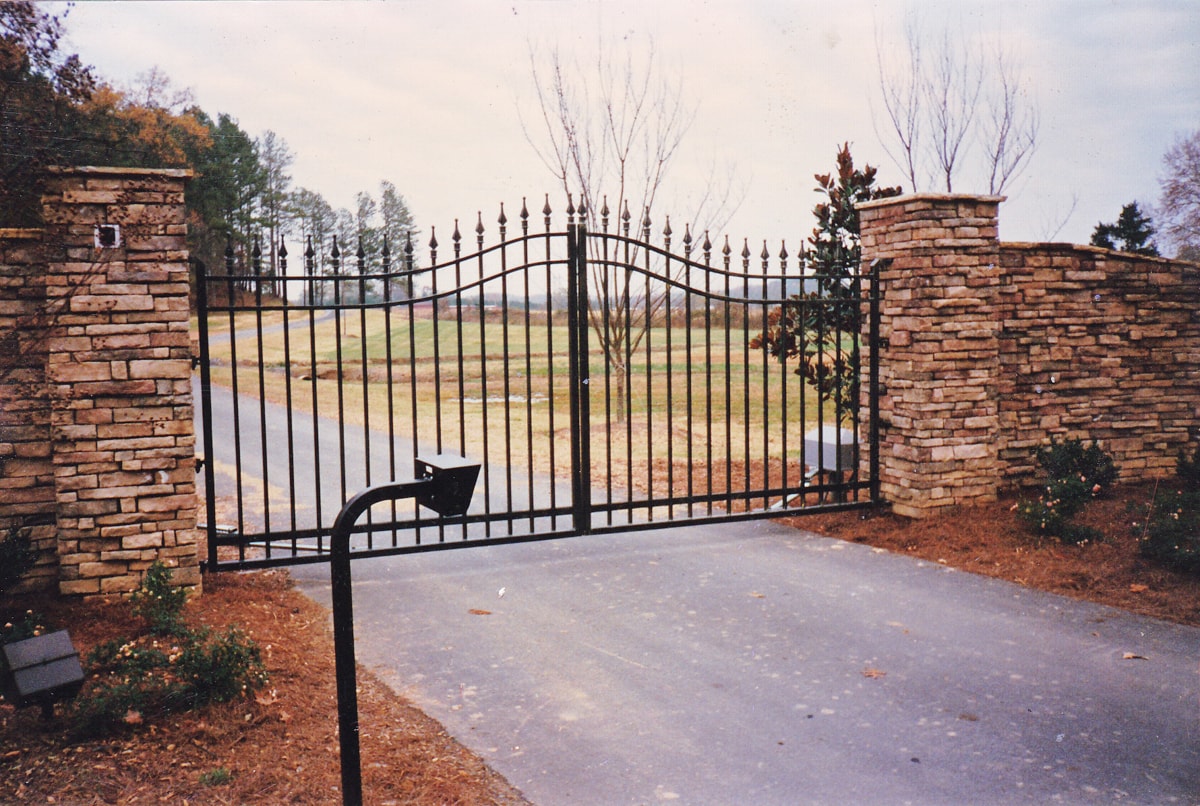

An automatic opener turns a driveway gate into something you actually use every day instead of leaving it standing open. But “gate opener” covers a lot of ground: swing and slide operators, solar and hardwired power, keypads and phone apps, and safety devices that matter more than most people realize. This guide explains how the pieces fit together, so you can ask the right questions whether you’re automating a new gate or an old one.
We build driveway gates and install gate openers from our shop in Cave Spring, just southwest of Rome, so we plan the gate and the opener together. Here’s what we’d want any Rome-area homeowner to know first.
How an automatic gate system works
An automatic gate is a small system with a handful of parts:
Swing vs. slide operators
Swing gate operators
Swing gates are the most common type of driveway gate, and most swing operators are arm-style units mounted between the post or column and the gate. A double gate typically gets an operator on each leaf, working together. Swing gates need a clear arc to open into, and a drive that rises behind the gate can stop a swing gate short.
Sliding gate operators
A sliding gate rolls sideways along a track or rides on a cantilever frame, and its operator usually sits on a pad beside the opening and drives the gate along a toothed rack. Sliders work well where the drive slopes up behind the gate or there’s no room for leaves to swing, but they need clear space along the fence line equal to the opening.
Matching the operator to the gate
Every operator is rated by its manufacturer for a maximum gate length and weight, and those ratings aren’t suggestions. Heavy custom steel gates, long leaves and solid panels that catch the wind all push an operator harder. Sizing the operator to the real gate, not a guess, is one of the biggest factors in how well the system works over time.
Solar vs. hardwired power
When solar works well
Solar openers are popular for long drives where running power would mean a long trench. They work when the panel gets enough direct sun to keep the battery charged for the number of times the gate opens each day. Heavily wooded lots, panels shaded by a column or tree line, and gates that cycle constantly are where solar struggles. North Georgia’s shorter winter days count too, so think about the gate’s sun in December, not just July.
When hardwired makes more sense
Hardwired power is the most dependable option for busy gates, shady sites and systems with extras like lighting or an intercom. It does mean getting power to the gate, usually through conduit in a trench, and the work should be done by an electrician. Inside the City of Rome, the Rome-Floyd Building Inspection permit FAQ lists new electrical wiring among the work that needs an electrical permit. Outside the city, check with your county.
Battery backup
Many systems can be fitted with a backup battery so the gate keeps working for a while during a power outage. Solar systems already run from a battery. Ask about it when you plan the system.
Access options: how people get in
If the gate crosses the only drive to the house, also think about how fire trucks and ambulances will get through. Ask your local fire department whether it has a preferred access method for gated driveways.
Safety: what UL 325 and ASTM F2200 mean for homeowners
A moving gate weighs a lot and doesn’t know a child, pet or car is in its path unless it’s told. Two standards matter here. UL 325 is the safety standard that covers gate operators, including the entrapment protection they need, such as photo eyes and sensing edges. ASTM F2200 covers how automated vehicular gates themselves are built, with the goal of reducing gaps, pinch points and other hazards. You don’t need to read either one, but you should expect your installer to know them, to place safety devices where people and vehicles actually move, and to show you how they work.
Power outages and manual release
Operators generally have a manual release that lets the gate be opened by hand when the power is out or the battery is dead. How it works varies by brand and model, so keep the operator’s manual and learn the release before you need it. If your gate is your only way in or out, battery backup is worth serious thought.
DIY kit or professional installation?
Store-bought opener kits are built for light gates, and they can work well on one. Custom iron and steel gates are often heavier and longer than those kits are rated for, and a kit installed without proper safety devices is a real hazard. A professional install also means the posts, hinges and operator mounts are checked as part of the job, not after something fails.
Adding an opener to an existing gate
Many gates can take an opener, but not all of them. The gate has to swing freely and level on good hinges, the posts must be solid, and the gate can’t be too heavy or too flexible for the operator. A sagging gate or a leaning post needs fixing first, which our gate repair and restoration work covers.
Building new? Our guide to choosing a driveway gate covers planning for automation from the start, and what drives driveway gate cost explains how an opener fits into the budget.
Frequently asked questions
Do solar gate openers work in winter in North Georgia?
They can, as long as the panel gets enough direct winter sun to keep the battery charged for the number of daily openings. Shade from trees or columns is the usual problem, not the cold itself.
Can my existing iron gate be automated?
Often, yes. It depends on the gate’s weight, how freely and levelly it swings, the hinges and the posts. We’ll look at it on site first.
Do I need a permit for a gate opener?
It depends on the work. Inside the City of Rome, new electrical wiring needs an electrical permit under the city’s permit FAQ. Call Rome-Floyd Building Inspection at 706-236-4480 for your project, or your own county outside Rome.
Is solar or hardwired better?
Neither is better everywhere. Solar suits sunny gates at the end of long drives; hardwired suits shady sites, busy gates and systems with extra accessories.
Plan your automatic gate with Fabco
Thinking about an opener for a new or existing gate? Call (706) 232-2642 or send us a message for a free quote. See our automatic gates and gate openers page for how we plan a system.
Fabco Fabrications, Inc., 5592 Cave Spring Rd SW, Cave Spring, GA 30124, just southwest of Rome. Open Monday through Friday, 9 a.m. to 5 p.m.